Few cars have made a long-lasting impression on American history like the Ford Mustang. As the longest-produced Ford nameplate, this famous muscle car has dominated everything from pop culture to the racetrack, and it's not done yet. Read on to explore our Ford Mustang generations guide to learn about the Ford Mustang timeline, the Mustang's years of production, and how this incredible vehicle has cemented itself into our culture.
First Generation (1964-1973)
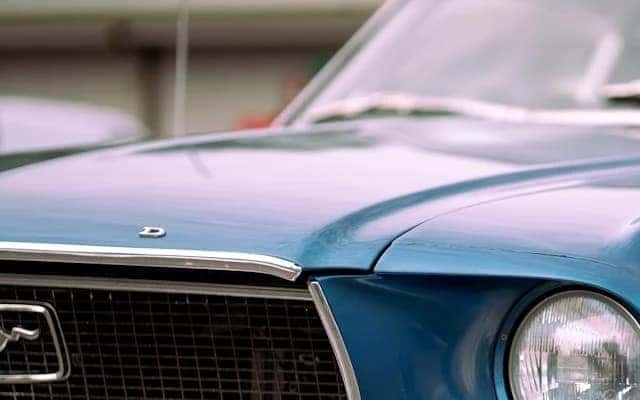
The first-generation Mustang made its unforgettable debut on April 17, 1964, at the New York World’s Fair, marking the birth of the pony car segment. With its long hood, short rear deck, and sporty design, it quickly became an American icon, selling over 400,000 units in its very first year. And with a variety of body styles, including coupe, fastback, and convertible styles, it’s no wonder why the original Mustang appealed to so many drivers. The 1964-½ Mustang, which was an early production run of the 1965 model, remains a prized collector’s item today thanks to its unique manufacturing quirks.
Ford continued to build on the Mustang’s popularity in the coming years by introducing high-performance models, including the 1965 Shelby GT350 and the 1969 Boss 429, which is still legendary today. These powerhouses rocketed Mustang’s reputation, giving it an edge on the road as well as the racetrack. By the end of the first generation, known as the classic Mustang years, these old Mustang models solidified the automaker’s legacy, selling more than 2.98 million of these early muscle cars.
Second Generation (1974-1978)
The second-gen Ford Mustang came racing onto the scene in 1974 with the debut of the Mustang II, in part, to address the oil crisis and stricter emission regulations that were rolled out the previous year. With this release, Ford downsized the Mustang. Inspired by the Ford Pinto platform, the goal was to improve fuel efficiency. While the Mustang II lacked a convertible option, it was produced as a coupe and a 2+2 liftback. Ford also introduced smaller engines this time around, including a 2.3-liter inline-four and a 2.8-liter V-6. A 4.9-liter V-8 would make a return in 1975. While the Mustang II might not be as powerful as its predecessor, it remained quite popular and even outperformed the Camaro in terms of sales in 1974. To entice the performance-driven crowd again, Ford introduced the Cobra II in 1976. This model took aggressive styling cues from the classic Shelbys and got an upgrade in 1978 with the King Cobra, which featured a bolder look, racing stripes, and a V-8 engine. Despite mixed reviews, the Mustang II ensured the model's survival, making it a significant part of the Mustang's evolution.
Third Generation (1979-1993)
By the late '70s, the Mustang was ready to be reinvented and reimagined. The solution? The Fox Body Mustang. This model was lighter, leaner, and meaner than its predecessors. Built for a new era of performance on Ford's versatile Fox platform, it made its debut in 1979 and marked a turning point for the brand. The 5.0-liter V-8 made its triumphant and long-awaited return with this edition, restoring the Mustang to its full muscle car glory. Meanwhile, special editions such as the 1984 Mustang SVO packed a turbocharged punch, and the 1987 Mustang GT came in hot with a more aggressive stance flanked by serious performance upgrades. Ford capped off this generation with the 1993 Mustang SVT Cobra, giving die-hard performance fans a track-ready beast backed by the Special Vehicle Team (SVT). For 15 years, the Fox Body provided endless mod potential, earning its reputation as a wrencher's dream and solidifying it as a fan favorite in the Mustang evolution.
Fourth Generation (1994-2004)
Built on the SN95 platform, the 1994 Ford Mustang came in swinging with improved aerodynamics, suspension, and engine performance. Ford also revised the SVT Cobra for the fourth generation, introducing the race-bred 2000 Cobra R with a 5.4-liter V-8 and later closing out this lineup with the 2003-2004 Terminator Cobra. Special editions such as the 2001 Bullitt and the 2003-2004 Mach 1 paid homage to Mustang's rich history while receiving serious performance upgrades, contributing to the ongoing progression of Mustang models over the years.
Fifth Generation (2005-2014)
Roaring onto the scene in 2005, the Ford Mustang reappeared with a retro-futuristic design reminiscent of the 1960s. Built on the all-new S197 platform, this generation took the classic muscle car aesthetic and gave it a sleeker, more aggressive edge. Ushering in a lineup of true performance beasts, Ford launched the 2007-2014 Shelby GT500, the 2012-2013 Boss 302, and the California Special during this timeframe. But, it was the 5.0-liter Coyote V-8 launched in 2011 that really took the cake, delivering a whopping 412 horsepower and a high-revving, naturally aspirated roar that Mustang lovers craved. With over 1 million units sold, the fifth-generation Mustang struck it big by bringing the brand back to its performance roots while giving it an innovative boost.
Sixth Generation (2015-Present)
Introducing independent rear suspension for the first time in standard production, the 2025 Ford Mustang brought improved handling and a more refined ride to the lineup. Ford also added a new 2.3-liter EcoBoost turbocharged engine alongside the tried-and-true 5.0-liter V-8 featured in the GT. Of course, true Mustang fans were drawn to the Shelby GT350, which delivered blistering performance and track-ready engineering. The 2025 Mustang GTD became the most powerful factory Mustang ever, boasting a jaw-dropping 815 horsepower thanks to its supercharged 5.2-liter V-8 engine.
The Legacy Lives On
From its groundbreaking debut in 1965 to its modern lineup of powerhouses, the Ford Mustang remains one of the most beloved American muscle cars. Whether you're obsessed with the classic Mustang years or can't wait to experience the latest high-performance models, there's so much to appreciate about the Ford Mustang's history. Now that we've recapped the history of Mustangs, why not take one for a spin? Schedule a test drive with us today to see what all the hype is about.